-
"That is the point that I am trying to make. The web is not, despite the desires of so many, a publishing medium. The web is a customer service medium. “Intense moderation” in a customer service medium is what “editing” was for publishing." Paul Ford is great.
-
"I have worked for an hour to create this sight, shedding the mistakes of my previous drafts as I go. But each ill-fated Meat Boy, each mistimed jump and buzz-saw victim, deserves to be here in the replay with me. Without each of them, my successful run would not exist. By collapsing my attempts into one moment, Super Meat Boy depicts not time wasted on failed runs, but experience gained as I slowly perfected my craft." Like I said, one of my games of the year, and this deftly explains why.
Media from 2010
03 January 2011
In 2009, I kept a textfile in ~/Documents to track all the books I read. In previous years, I’d forgotten what I’d read, and didn’t want to lose track.
At the end of the year, I was disappointed in how tiny the list was. This was mainly in down to 2009 being a rubbish year (as years go). But still: for someone who loves books, it wasn’t enough.
This year, I repeated the exercise, but with a file called media-2010.txt. The goal was to track everything I consumed, whether or not I liked it or not. My thinking was simple: I wanted to read more, but by tracking movies, TV shows, exhibitions, and games, I hoped that I could at least see what I was doing when I wasn’t reading.
This isn’t the full list, but it’s the picks of it for this year.
Films
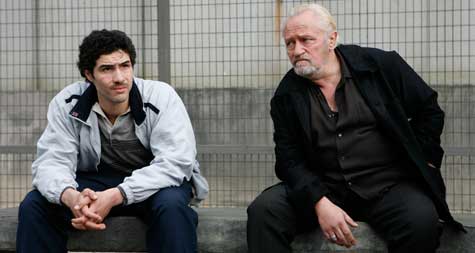
The best film I saw in 2010 was Jacques Audiard’s A Prophet. His The Beat That My Heart Skipped was already a firm favourite, so I was hugely enthusiastic for this, and really wasn’t disappointed. Superficially, it’s a prison drama, but there’s so much more going onto it than that, and it segues between life inside the prison, trips outside, and fantasy sequences with little fanfare. An early, pivotal scene of violence is brutal and truly unpleasant; it’s intended to stick with you throughout the movie, as it’s a hinge the plot sits upon. But outside that, violence is more a threat than a depiction, perhaps making the memory of that horrendous scene more notable.
It’s intense, nerve-wracking, and the promise of redemption dangled like a carrot in front of characters with many good reasons not to take it. Marvellous performances, wonderful moviemaking.
But: it really came out in 2009.
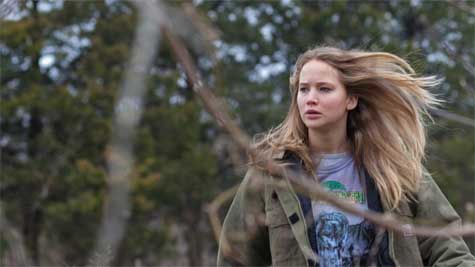
The best film I saw that was released in 2010 was Winter’s Bone; a cold slice of Ozarks-Noir. Which, of course, isn’t a genre, but the easiest way to describe this quest for a missing patriarch. Jennifer Lawrence’s performance is incredible, and I hope she’s rewarded. It’s not an easy movie by any means – the mountains are as much part of the scenery as they are written into the faces of much of the supporting cast – and you’ll never feel warm whilst watching it. It’s not a quest for redemption; just for survival. By the end of the film, it’s clear that all the characters are fighting to survive in their own ways. Great. (And: whilst Lawrence is the obvious stand-out, I loved John Hawkes’ nuanced performance as Teardrop).
I saw a lot, though, and enjoyed most things. I had a great time with Inception, primarily because I really like heist movies – put the team together, execute the job – and Nolan’s imaginative, clockwork plot played out as an excellent genre movie. It’s not necessarily clever, but it is intricate, and its execution is marvellous. Also, the suits are really good.
On the TV, I mainly enjoyed shows from America. The big discovery for me was Community, which is more inventive than many sitcoms I’ve seen a while. And I loved Rubicon for its intelligent take on intelligence work, even if it had a few too many plots for its own good, making its cancellation even more frustrating for fans. But what an actor’s show: Michael Cristofer’s Spangler is as devious as he is distracted, and Arliss Howard’s Ingram turned out to be exactly the sociopath you suspected he might be – an inventive sociopath, nontheless.
Books
Lots of alternate history this year.
Christopher Priest’s The Separation was a real stand-out – a tangly, bifurcated take on WWII, with two narratives of which only one can be true – though he refuses to commit to which. Twins, acting, impersonation, the negotiations of international politics; it’s a cracking read, and really shouldn’t have been buried on the SF shelf.
Similarly, Keith Roberts’ Pavane, a short-story sequence imagining England in the late 20th Century when ruled by a Holy Roman Empire was a real find. It’s a book heavily rooted in place: primarily around Dorset, Bournemouth, Dartmoor, that neck of the woods. In it, his characters enact a dance over fifty years – one that, initially, seems random, but structure eventually emerges. I also really liked the stuff about semaphore.
The biggest thing I read – spread throughout the year – was James Ellroy’s Underworld USA trilogy. The books stand alone well, if you don’t want to read the lot, and by the end, I think I can comfortably say that the very first (American Tabloid) is the best. They’re dense, knotted, slang-laden tales of politics and corruption, bad cops and good bagmen, surveillance and assassination, race and communism; the dark side of the sixties (and thus, the late fifties and early seventies – the lead-in and the results) explored through what might be true, might be history, might be a kind of alternate history. I was entranced, even when I squirmed through his machine-gun prose, the character’s casual racism (LA in the sixties as the black militant groups start to exert influence is not the most… sensitive setting), and the squicky violence. Though I like American Tabloid the first, Blood’s A Rover – 2009’s final installment – contains the clearest signs of redemption for many of the characters, and, in Don Crutchfield, one of Ellroy’s quietest protagonists.
Art
I think my favourite exhibitions of the year were the Irving Penn portraits at the NPG, and the Eadward Muybridge at Tate Britain.
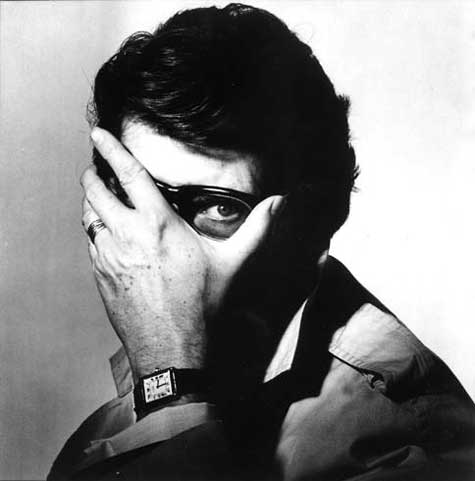
The Penn was a lovely retrospective, showing an artist exploring portraiture and challenging its constraints. So much consistently inventive work throughout his career; so many brilliant portraits.
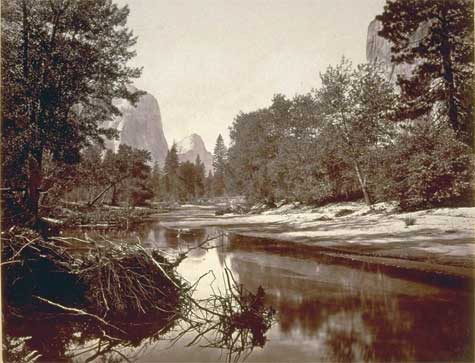
The Muybridge was a fascinating portrait of a man exploring photography itself. His time-and-motion images are rightly seminal, but what I wasn’t aware of was his landscape work – lugging huge photographic plates up the Californian hills, as an early landscape photographer. My favourite work in the exhibition were the gigantic, 360º panoramas of a pre-Earthquake San Francisco. An eccentric, then, but what an intrepid explorer of a nascent medium.
Oh, and special note to River Sounding at Somerset House; on a beautiful summer day, the thrumming, shaking bass of the Thames in its damp cellars was sensational.
Theatre
More trips to the theatre than in a long while, albeit still not many by the standard of the other sections of the list. One obvious stand out: The Old Vic’s revival of Tom Stoppard’s The Real Thing. Great to see this revived: in many ways, it’s one of his “straightest” plays, and manages to shift from a brilliant – if somehwat obvious opening – into a more thoughtful, considerate piece. It helped that Toby Stephens was utterly brilliant.
Music
One gig really stood out. Rival Schools at Hoxton Bar And Grill was a highlight. The post-hardcore group, almost on hiatus, return nine years after their first record with a second. And, with a falling star, comes a smaller venue: it sold out in an hour, was packed, and everybody knew the words to everything. And yet: so exciting to see such a polished, experience group of musicians still on top of the game, still playful – noodling around Beatles songs and metal covers between tracks – and playing to the audience perfectly.
And, of course, The Hold Steady in the summer played another of their great live sets: they’re fine enough on record, but are easily one of my favourite live acts: so much enthusiasm and energy, and, as ever, a ninety minute set with no duff moments.
Last.fm isn’t a representative example of what I enjoyed this year, strangely. Highlights from the CD stack: The Roots’ How I Got Over, the incredible My Beautiful Dark Twisted Fantasy, the Glasser and Warpaint albums, Scuba’s Triangulation, and many more besides.
My favourite moment in pop, though, was Nicki Minaj’s verse on Kanye’s Monster. For me, it’s one of the weaker tracks on MBDTF – until those ninety seconds, which are just something else. Seriously: best moment of the year.
Games
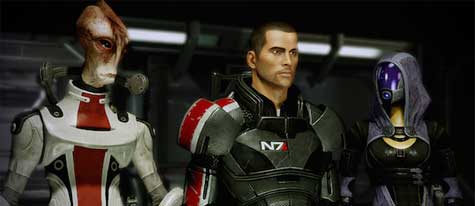
It’s hard to get away from Mass Effect 2, for me. My head tells me it’s exactly what I shouldn’t like – big, overarching, technical, lots of Up Front Story-Telling. It’s a bit too genre-heavy. And yet: my heart swelled as I played it. The gamer in me didn’t like the episodic structure, but the adult in me did: it played out like a series of Battlestar Galactica, broken near-perfectly into about 20-odd 45 minute chunks, advancing side-stories and main plot in turns. The shooting is now competent enough to not be hateful; the writing is great (when it’s not being a bit crap), and oh, the characters. Garrus, Thane, Legion, and especially Mordin; very strong. I know many people who didn’t get on with it, and I respect that: their problems were rarely mechanical, and usually about the universe, the characters, it not clicking. I think that’s OK – much better to dislike something because it’s not to your taste than because it’s entirely unlovable. Well done, Bioware.
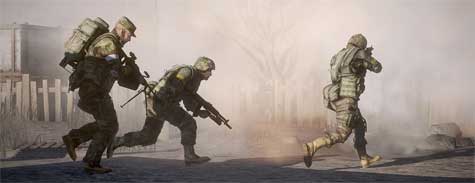
Battlefield: Bad Company 2, as well as being a total mouthful to say, was a surprise hit for me, and featured my favourite piece of gaming interface design last year: the way it utilises the back/select button. Public servers feature teamwork, almost no abuse, and very little voice chat, simply because of that button. It marks targets you’ve seen, and the little icon above them becomes visible for your whole team. As a result: everyone marks targets for everyone else. They get points for the mark, you get points for the kill, and so you mark targets for them. We don’t need to talk, or try to get people to play the team game, or argue with idiots, because we’ve got the back button. Couple that with the ability to respawn on squadmates, rather than way back at base, and BFBC2 works teamplay into its very mechanics without being complex or nerdy. The Vietnam expansion has brought people back, but the main game is still played to a high, social standard. The only team-game with public serves this good is TF2, in my tiny, humble opinion. And: the sound-design is phenomenal.
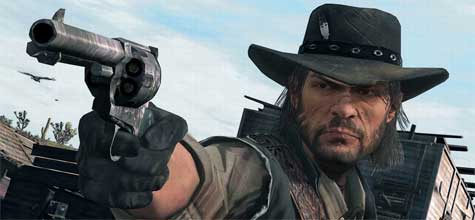
Red Dead Redemption was totally captivating for the twenty-or-so hours I explored its landscape, sidequests, and primary plot. It was lovely to see a genre so rarely explored in games done pretty well, although I do hope that some of the topics it explored – journey-as-narrative, most notably – can be explored without the brute force of a Rockstar budget and (alleged) Rockstar San Diego working practices.
Super Meat Boy is brilliant. Totally the sort of game my head likes. If you’ve not played it, you should. It’s got the tightest controls I’ve ever seen on a 360, brilliant level design, hilarious replays, and it manages to be the best kind of “old-school” fun. It’s nearly caused me to break a few controllers, but that’s part of the charm.
What else? Halo Reach, for starters. Halo is such an acquired taste, in my opinion; a real gamer’s game. After not caring much for 3, I ended up adoring Reach; a fine single-player campaign, tight, subtle multiplayer, and the rush that is Firefight. So much Firefight; so many grunts exploding in confetti. In some ways, it’s the top of the list – the most gamey-game I played this year. But it’s polish on something that was great to begin with, and not for everyone. If you’ve played it and liked it, you already know.
I didn’t play enough Super Street Fighter IV after giving so much time to the original, non-super variant last year. No matter; it’s not going away any time soon. And my unfinished pile is still high – right now, I’m enjoying Castlevania: Lords of Shadow and the majestic Need For Speed: Hot Pursuit, and they’re going to see me well into 2011.
That was a few things I liked in 2010; by no means all. Next year: more.
-
"This Posters shows, how many floppies are enough for current softwares." I do not miss installing from floppy at all.
-
"This is what the next generation of the mega-selling phone will look like. They'll be rough facsimiles of the high-end smartphones forged for well-heeled buyers, stripped of fat and excess—an embodiment of compromise. They'll be 90% of the phone for 20% of the price, with FM radios instead of digital music stores, and flashlights instead of LED flashes. This is how the other half will smartphone, if you want to be so generous as to call the developing world's users a half. We're not even close." Yes.
-
"Sahel Sounds rounded up music salvaged from the discarded mobile phone memory chips in West Africa." Wow; the after-life of dead electronic media made real.
-
"Board games are different. Sure, while you might love a board game for the sense of immersion it provides, or the way the game lifts off the table and fills the room, you also might love it for how beautiful the mechanics are. It’s like looking inside a clockwork watch. That fascination, as you see how all the pieces fit together, how everything is timed to perfection, how balanced it all is. With a beautiful board game design, you can love it for that craftsmanship you can feel with every turn." Yup. But, of course: this is, increasingly, why I like any game. It's just much more visible in boardgames – where you have to wrangle the rules yourself. And everything else – the immersion, the involvement – will come too; it just comes from that clockwork heart.
Media-cyborgs
16 September 2010
I’ve already linked to it on delicious, but this Snarkmarket post demanded a decent quotation:
…you start to see cyborgs all around you. It’s not just people with, you know, gun-legs; it’s anybody who uses a cell phone or wears contact lenses. It’s anybody who brings a tool really close in order to augment some capability.
Aren’t there people who have brought media that close? Aren’t there people who manipulate it, in all its forms, as naturally as another person might make a phone call, or speak, or breathe?
When you think of someone like Kanye West or Lady Gaga, you can’t think only of their brains and bodies. Lady Gaga in a simple dress on a tiny stage in a no-name club in Des Moines is—simply put—not Lady Gaga. Kanye West in jeans at a Starbucks is not Kanye West.
…which is about as much as I can quote without reproducing the whole article. But there’s so much good stuff here. Media as force-multiplier and prosthesis. Media as true-geography. Media as identity. It’s really, really good, overlapping with so many of my own interests, making a convincing point.
-
"We’re all Jamie Madrox now." (This is so good).
-
Lovely: roleplaying Ferris Bueller not only on Twitter, but also on Foursquare. I love that Foursquare has a policy to allow "fake check-ins but not to reward them points"; there's lots of potential there, both playful and storyful.
-
"Emo’s rise coincides with the explosion of social networking, the fracturing of commodification, the emergence of micro-trends, the mainstream adoption of alt-porn tropes… Emo’s the musical centre of a pop-culture whirlwind that doesn’t really seem to have been explored much, and when it has it’s often been addressed either in dismissive or alarmist tones." As an emo apologist, I really need to write more in response to this – they're topics I've covered in my head several times.
What’s a media inventor?
22 June 2010
Robin Sloan drops some smart science:
Also: what’s a media inventor, anyway? Here’s my (totally made-up) definition: It’s somebody primarily interested in content who also experiments with new technology, new processes, and new formats. Allen Lane was a media inventor. Early bloggers were media inventors. Right now, the indie video game scene is full of media inventors.
Fundamentally, I think, a media inventor is someone who isn’t satisfied with the suite of formats that have been handed down to him by his culture (and economy). Novel, novella, short story; album, EP, single; RPG, RTS, FPS — a media inventor doesn’t like those choices. It turns out a media inventor feels compelled to make the content and the container.
-
And, with their 119th update, Valve helpfully included the list of all their previous patches, as well. Just look at the amount that's changed – and how swiftly. A proper, living game (unlike the stillborn 360 version). Can't wait to play it on the Mac; it's almost like a different game to the one I played at the beginning.
-
"Ben Gimpert is a friend of the Open Library. He and I got together over lunch a few months ago to talk about big data, statistical natural language processing, and extracting meaning from Open Library programmatically. His efforts are beginning to bear some really interesting fruit, and while we work out how we might be able to present it online, we thought you might be interested to hear what he’s been up to." Answer: good things. Ben is awesome, and this work sounds great. (I can't quote a suitable passage, so George's intro will have to do).
-
A few short tips on find; one of the bash tools I use least, and should probably use more.
-
"Diller, Brill, and Murdoch seem be stating a simple fact—we will have to pay them—but this fact is not in fact a fact. Instead, it is a choice, one its proponents often decline to spell out in full, because, spelled out in full, it would read something like this: “Web users will have to pay for what they watch and use, or else we will have to stop making content in the costly and complex way we have grown accustomed to making it. And we don’t know how to do that.”"
-
"I missed the selection, the album art, and the dusty trays and hand-written CD-Rs. The absence of the compact disk reminded of another format that had recently gone away: the 3.5" floppy diskette. The Floppy Stereo attempts to recreate that ceremony within a single device. An album's playlist file is stored on a floppy disk, complete with the album art. When it is loaded, the playlist is read and retrieves the songs from my MP3 collection." There's a similar tactility in the 3.5" disk to, say, an eight-track cart. I like that.
-
"The history of roads is the history of ourselves: our desire for community and our fears about its fragility; our natural instinct to expand the possibilities of life set against our premonitions of death, destruction and loss; and our fierce arguments about what is valuable and beautiful about the world. But this history, like the road itself, is full of loose ends and detours, unfinished stories and stalled narratives."